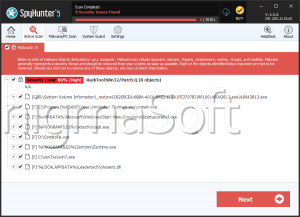
Hacktool.Crack.Q
Threat Scorecard
EnigmaSoft Threat Scorecard
EnigmaSoft Threat Scorecards are assessment reports for different malware threats which have been collected and analyzed by our research team. EnigmaSoft Threat Scorecards evaluate and rank threats using several metrics including real-world and potential risk factors, trends, frequency, prevalence, and persistence. EnigmaSoft Threat Scorecards are updated regularly based on our research data and metrics and are useful for a wide range of computer users, from end users seeking solutions to remove malware from their systems to security experts analyzing threats.
EnigmaSoft Threat Scorecards display a variety of useful information, including:
Popularity Rank: The ranking of a particular threat in EnigmaSoft’s Threat Database.
Severity Level: The determined severity level of an object, represented numerically, based on our risk modeling process and research, as explained in our Threat Assessment Criteria.
Infected Computers: The number of confirmed and suspected cases of a particular threat detected on infected computers as reported by SpyHunter.
See also Threat Assessment Criteria.
| Threat Level: | 50 % (Medium) |
| Infected Computers: | 45 |
| First Seen: | August 26, 2021 |
| Last Seen: | December 12, 2025 |
| OS(es) Affected: | Windows |
The detection of Hacktool.Crack.Q on your system indicates the presence of a potentially malicious tool that could compromise your security and privacy. This detection name suggests that the threat is related to hacking tools, which are programs designed to bypass security mechanisms or gain unauthorized access to systems or data.
Table of Contents
What Is Hacktool.Crack.Q?
Hacktool.Crack.Q is a type of malicious software that falls under the category of hacktools. These are programs created to exploit vulnerabilities in software or systems, often for the purpose of gaining unauthorized access, stealing sensitive information, or disrupting normal operations. The specific name Hacktool.Crack.Q implies it might be used for cracking or bypassing security measures, such as passwords or encryption, but without more detailed information, it's difficult to pinpoint its exact capabilities or intentions.
How Hacktool.Crack.Q Operates
Malicious tools like Hacktool.Crack.Q typically operate by exploiting weaknesses in system security. This could involve using brute force attacks to guess passwords, exploiting known vulnerabilities in software to gain elevated privileges, or using social engineering tactics to trick users into divulging sensitive information. Once installed on a system, such tools can be used to steal data, install additional malware, or provide backdoor access to attackers. The operational specifics of Hacktool.Crack.Q would depend on its design and the goals of its creators, but the general principle involves compromising system security for malicious purposes.
Symptoms of Infection
Systems infected with Hacktool.Crack.Q or similar malware may exhibit a range of symptoms. These can include unusual system behavior, such as unexpected crashes or slowdowns, appearance of unfamiliar programs or icons, or changes in system settings without user intervention. Additionally, users might notice increased network activity, as malware often communicates with command and control servers or exfiltrates data. However, some malicious tools are designed to operate stealthily, making them difficult to detect based on symptoms alone.
How to Remove Hacktool.Crack.Q
- Enter Safe Mode with Networking to limit the malware's ability to interfere with the removal process. This mode allows you to use the internet to download removal tools while minimizing system activity.
- Perform a full scan of your system using a reputable anti-malware tool, such as SpyHunter. Ensure the tool is updated to the latest version to maximize its effectiveness against current threats.
- Uninstall suspicious programs that you do not recognize or that were installed around the time you noticed symptoms of the infection. Be cautious and only remove programs you are certain are malicious or unnecessary.
- Reset your web browsers, including Chrome, Firefox, and Edge, to their default settings. This can help remove any malicious extensions or settings changes made by the malware.
- After completing the above steps, reboot your system and then perform another full scan to ensure that the malware has been completely removed and no additional threats are present.
Conclusion
The detection and removal of Hacktool.Crack.Q are critical steps in protecting your system and data from potential harm. By understanding what this detection means and following the appropriate removal procedures, you can significantly reduce the risk of your system being compromised. It's also important to maintain good security practices, such as keeping your operating system and software up to date, using strong and unique passwords, and being cautious when opening email attachments or clicking on links from unknown sources. Regular system scans with reputable anti-malware tools can also help identify and remove threats before they cause significant damage.
Analysis Report
General information
| Family Name: | Hacktool.Crack.Q |
|---|---|
| Signature status: | Root Not Trusted |
Known Samples
Known Samples
This section lists other file samples believed to be associated with this family.|
MD5:
83b41ccaf79b0c7dc3d7d0af59538cd7
SHA1:
d019da68b782fbc43202476bdb01da952cba7c4d
SHA256:
7DB20626E470F25E94359D2D83E1F5ED40868A0A0C29EFB9662570FBB6A92F19
File Size:
2.08 MB, 2077368 bytes
|
Windows Portable Executable Attributes
- File doesn't have "Rich" header
- File doesn't have debug information
- File doesn't have exports table
- File is 32-bit executable
- File is either console or GUI application
- File is GUI application (IMAGE_SUBSYSTEM_WINDOWS_GUI)
- File is Native application (NOT .NET application)
- File is not packed
- IMAGE_FILE_DLL is not set inside PE header (Executable)
- IMAGE_FILE_EXECUTABLE_IMAGE is set inside PE header (Executable Image)
File Icons
File Icons
This section displays icon resources found within family samples. Malware often replicates icons commonly associated with legitimate software to mislead users into believing the malware is safe.

Windows PE Version Information
Windows PE Version Information
This section displays values and attributes that have been set in the Windows file version information data structure for samples within this family. To mislead users, malware actors often add fake version information mimicking legitimate software.| Name | Value |
|---|---|
| Company Name | 杭州顺网科技股份有限公司 |
| File Description | 山火租号 |
| File Version | 9, 3, 8, 10249 |
| Legal Copyright | CopyRight (C) 2018-2020 shunwang. All Rights Reserved |
| Original Filename | main.exe |
| Product Name | shzh |
| Product Version | 9, 3, 8, 10249 |
Digital Signatures
Digital Signatures
This section lists digital signatures that are attached to samples within this family. When analyzing and verifying digital signatures, it is important to confirm that the signature’s root authority is a well-known and trustworthy entity and that the status of the signature is good. Malware is often signed with non-trustworthy “Self Signed” digital signatures (which can be easily created by a malware author with no verification). Malware may also be signed by legitimate signatures that have an invalid status, and by signatures from questionable root authorities with fake or misleading “Signer” names.| Signer | Root | Status |
|---|---|---|
| Hangzhou Shunwang Technology Co.,Ltd | DigiCert Trusted Root G4 | Root Not Trusted |
| Hangzhou Shunwang Technology Co.,Ltd | DigiCert Trusted Root G4 | Root Not Trusted |
File Traits
- HighEntropy
- x86
Block Information
Block Information
During analysis, EnigmaSoft breaks file samples into logical blocks for classification and comparison with other samples. Blocks can be used to generate malware detection rules and to group file samples into families based on shared source code, functionality and other distinguishing attributes and characteristics. This section lists a summary of this block data, as well as its classification by EnigmaSoft. A visual representation of the block data is also displayed, where available.| Total Blocks: | 275 |
|---|---|
| Potentially Malicious Blocks: | 14 |
| Whitelisted Blocks: | 261 |
| Unknown Blocks: | 0 |
Visual Map
? - Unknown Block
x - Potentially Malicious Block