Chinese Hackers Target U.S. Internet Providers in Silent Cyber Attack
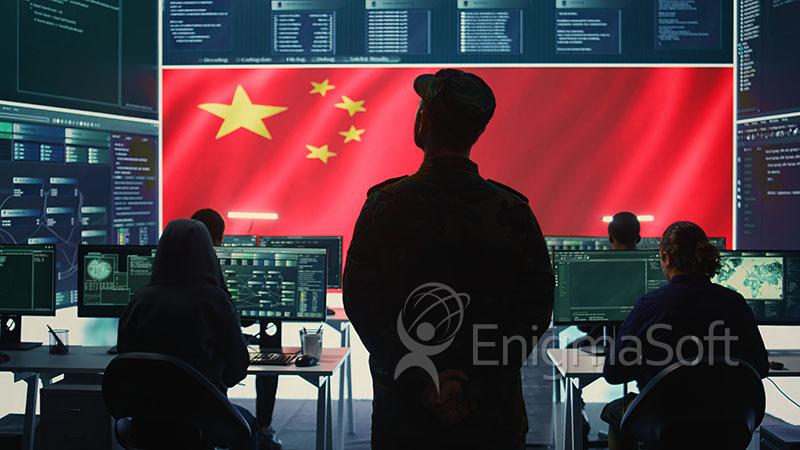
A chilling new chapter in cyber warfare has unfolded, as Chinese-backed hackers breach the digital defenses of several U.S. internet service providers (ISPs). In an alarming revelation, a covert campaign aimed at infiltrating critical infrastructure has been underway, with experts now racing to uncover the full extent of the damage.
According to a recent report by The Wall Street Journal, this attack is being attributed to a sophisticated group of hackers tracked by Microsoft under the code name Salt Typhoon. Also known by their aliases, FamousSparrow and GhostEmperor, these cybercriminals are part of a larger network of state-sponsored threat actors connected to Beijing.
Table of Contents
The Quiet Sabotage of U.S. Networks
What makes this cyber operation particularly terrifying is the sheer scale of its ambition. Sources close to the investigation suggest that these hackers may have penetrated the core routers of Cisco Systems, devices that control vast swathes of internet traffic across the U.S. These aren’t ordinary breaches. Gaining access to this level of infrastructure means they could, in theory, monitor, reroute, or even cripple internet communications without anyone noticing right away.
The hackers’ main objective appears to be maintaining long-term access, enabling them to siphon sensitive data at will or potentially launch devastating cyber attacks down the road. These types of operations are more than just a breach—they are a slow-burn sabotage, quietly festering in the background, lying in wait.
The Ghost in the Machine - Who Is GhostEmperor?
The group behind this unnerving attack, GhostEmperor, isn’t new to the scene. In fact, they were first identified by cybersecurity firm Kaspersky in 2021. Back then, the group was already executing highly evasive cyber operations across Southeast Asia. Using a stealthy rootkit known as Demodex, they had been infiltrating networks for years before their activities were discovered.
Countries like Thailand, Vietnam, and Malaysia were among their first victims. But GhostEmperor’s reach wasn’t confined to Asia. Targets spread across the globe, from Africa to the Middle East, with institutions in Egypt, Ethiopia, and Afghanistan also falling prey. Each attack followed a familiar pattern: careful intrusion, followed by the quiet establishment of a foothold within critical systems.
Most recently, in July 2024, cybersecurity firm Sygnia revealed that one of its clients had been compromised by this shadowy group. The hackers leveraged their access to penetrate not only the company but its business partner’s network as well, using various tools to communicate with their command-and-control servers. Disturbingly, one of these tools was identified as a variant of the Demodex rootkit, showcasing the group’s continued evolution in its hacking techniques.
A Nation-State-Driven Assault on Infrastructure
This breach of U.S. ISPs isn't an isolated incident. It’s part of a broader, deeply unsettling trend of Chinese state-sponsored attacks on critical infrastructure. Just days before this attack came to light, the U.S. government dismantled a 260,000-device botnet known as "Raptor Train," another cyber weapon deployed by a Beijing-backed group, Flax Typhoon. This botnet, capable of launching widespread cyber disruptions, is a sobering reminder of the scale of these threats.
The Chinese government’s involvement in these campaigns points to a long-term strategy aimed at destabilizing rivals and asserting control over key global networks. This isn’t just about spying on classified data or stealing intellectual property—it’s about gaining the ability to control or disrupt essential services, should the geopolitical winds shift.
What’s at Stake?
The implications of these attacks are downright terrifying. By gaining access to ISPs, hackers can monitor vast amounts of internet traffic and communications. From businesses to individuals, no one is immune to potential data harvesting. Even more concerning is the thought of what could happen if these hackers decide to leverage their access for a more destructive purpose. Imagine a scenario where millions of people are suddenly cut off from the internet, or worse, critical systems—banks, hospitals, or energy grids—are taken offline.
The danger of these attacks isn’t always in the immediate aftermath but in the unknown future. These hackers play the long game, planting seeds today that could grow into a full-blown catastrophe tomorrow.
How Do We Stop This?
The truth is, there’s no silver bullet to stop state-sponsored cyber attacks. However, experts agree that vigilance is key. U.S. companies, particularly those involved in critical infrastructure, must double down on their cybersecurity measures. This includes:
- Rigorous Network Monitoring: Real-time analysis of network traffic can help detect suspicious activity early on, limiting the damage from breaches.
- Layered Security Approaches: Implementing multi-layered defenses can slow down and complicate the efforts of even the most skilled hackers.
- Regular System Updates: Critical infrastructure, such as routers and servers, must be continuously updated with the latest security patches to close off potential entry points.
- Global Cyber Cooperation: Nations need to work together to combat these increasingly coordinated cyber threats. Sharing intelligence and resources could help identify and neutralize cyber threats faster.
The Chilling Future of Cyber Warfare
As digital borders become more porous, cyber warfare continues to evolve into a dangerous battlefield where no one is truly safe. Chinese-backed hacking groups like GhostEmperor aren’t just targeting government agencies or military installations—they’re infiltrating the networks we rely on every day.
The most unsettling part of all? They’re doing it quietly, and most of the time, we won’t even know until it’s too late.
This is the new reality we live in: a world where the internet, once a tool for global connection and progress, has also become a playground for espionage, disruption, and power plays. As state-sponsored actors continue to hone their skills, we must face the chilling possibility that our digital world is no longer under our control.